
Famous Prison Escapes Throughout History
28 February 2025
Thematic graphic — not a photograph of a named facility.

Throughout history, prison escapes have captured public imagination like few other events. Some escapes involved years of meticulous planning, while others relied on audacity, luck, or a combination of both. These stories not only make for compelling reading but have also fundamentally shaped how prisons approach security.
The Escape from Alcatraz (1962)
Perhaps the most famous prison escape in history, the June 1962 breakout from Alcatraz Federal Penitentiary involved Frank Morris and brothers John and Clarence Anglin. Over several months, the three men used improvised tools made from spoons and a vacuum cleaner motor to widen ventilation ducts in their cells.
They created dummy heads from soap, toilet paper, and real hair to place on their pillows, fooling guards during nighttime counts. After crawling through the widened vents, they climbed to the roof of the cellhouse and descended to the shore, where they inflated a makeshift raft made from raincoats.
The three men were never seen again, and the FBI officially presumed them drowned. However, the case was never fully closed, and debate continues over whether they survived the treacherous waters of San Francisco Bay. The escape directly contributed to the decision to close Alcatraz the following year.
The Great Escape (1944)
The mass escape from Stalag Luft III, a German prisoner-of-war camp during World War II, was one of the largest and most ambitious breakouts ever attempted. Allied prisoners dug three tunnels — codenamed Tom, Dick, and Harry — using improvised tools and an ingenious system of ventilation, lighting, and shoring.
On the night of 24 March 1944, 76 men escaped through tunnel Harry before the 77th man was spotted. Of the 76 who escaped, 73 were recaptured. Hitler ordered 50 of the recaptured men to be executed, an act classified as a war crime. Only three escapees successfully reached safety.
El Chapo's Tunnel Escape (2015)
Mexican drug lord Joaquín "El Chapo" Guzmán escaped from Mexico's highest-security prison, Altiplano, through a mile-long tunnel that opened directly beneath the shower in his cell. The tunnel was equipped with a modified motorcycle on rails, ventilation, and lighting.
The escape exposed serious corruption within the Mexican prison system and led to international embarrassment. Guzmán was recaptured six months later and eventually extradited to the United States, where he now resides at ADX Florence — a facility from which no one has ever escaped.
Roger Bushell and the Tunnel Engineers
Behind many great escapes lies remarkable engineering. The tunnels dug beneath Stalag Luft III extended over 100 metres and were dug at a depth of about 9 metres to avoid detection by seismographic microphones. The prisoners created an entire underground railway system to remove excavated sand.
Sand was dispersed across the compound by "penguins" — prisoners who carried bags of sand inside their trousers, releasing it gradually through hidden openings as they walked around the camp. The operation involved over 600 prisoners in various support roles.
Pascal Payet's Helicopter Escapes
French criminal Pascal Payet holds the remarkable distinction of having escaped prison by helicopter not once but three times. His first helicopter escape came in 2001 when accomplices hijacked a helicopter and landed it on the roof of Luynes prison near Aix-en-Provence.
After being recaptured and moved to a different prison, Payet orchestrated another helicopter escape in 2003. He was recaptured again in 2007 and escaped by helicopter a third time in 2007 from Grasse prison. He was finally recaptured in Spain in 2007.
The Impact on Prison Security
Every major escape has led to improvements in prison security. After the Alcatraz escape, the federal government invested heavily in more secure facility designs, eventually culminating in the construction of ADX Florence in 1994.
Modern prisons employ multiple layers of security including electronic surveillance, motion sensors, ground-penetrating radar to detect tunnels, and anti-helicopter cables over exercise yards. Many facilities also use regular cell searches, random body counts using electronic tracking, and sophisticated perimeter detection systems.
Despite these advances, escapes still occur. The fundamental challenge remains: prisons must balance security with the humane treatment of inmates, creating inherent tensions in facility design and operation. As long as people are imprisoned, some will attempt to escape, driving an ongoing evolution in correctional security technology and procedures.
Related prisons
No photograph in this directory
No facility photo on file; we do not use generic stand-ins for named sites.
Alcatraz Federal Penitentiary
Former capacity: 336
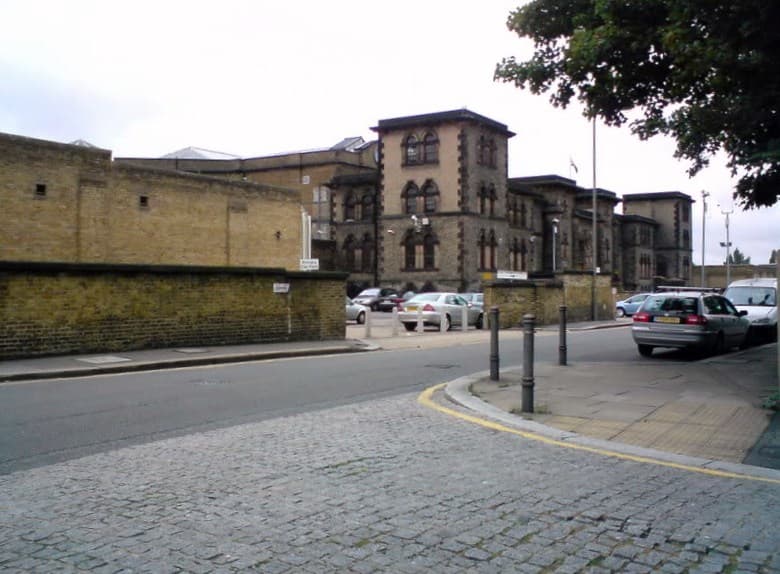
HMP Wandsworth
Reception
Wandsworth is a men’s prison in the London Borough of Wandsworth, South West London.