
Understanding Prison Overcrowding in England and Wales
15 January 2025
In England and Wales, prison overcrowding means the number of people in custody is high relative to the places the estate can hold to a decent, planned standard. Official statistics usually compare the prison population with certified normal accommodation (CNA) and with operational capacity. Exact headcounts and usable places move week to week and month to month — treat any single figure you see online as a snapshot, and check the latest Ministry of Justice Official Statistics rather than relying on an older article total.
Live and recent figures are published by the Ministry of Justice on GOV.UK: weekly estate population figures, monthly prison figures, and the broader Offender management statistics quarterly series. Find named establishments in the Prison Finder.
What overcrowding means (CNA vs operational capacity)
Certified normal accommodation (CNA) is the Prison Service measure of how many people an establishment can normally hold in decent, uncrowded conditions — often described as the good standard the service aspires to provide. Operational capacity is the total number of prisoners an establishment can hold without serious risk to good order, security, and the proper running of the planned regime. Operational capacity can be higher than CNA when shared cells are used under an agreed crowding level; it still has limits set by senior managers.
At estate level, usable operational capacity also allows for an operating margin (places that cannot safely be filled on a given day because of category mix, single-cell risk assessments, geography, and similar constraints). Crowding is commonly counted when people are held in a cell, room, or dormitory with more occupants than that space’s certified normal accommodation — for example two people in a cell designed for one.
HM Inspectorate of Prisons defines CNA and operational capacity in its glossary of terms. HMPPS explains certification and capacity setting in the Certified Prisoner Accommodation Policy Framework.
Are UK prisons overcrowded?
Often yes in the sense that many establishments hold more people than their CNA, even when the whole estate is still within published operational capacity. Headroom can be very tight: when usable places and population are close, small shocks (court backlog, recall spikes, or places taken offline for maintenance) create immediate pressure. Older local and Victorian-era prisons have long featured in inspection reporting on shared cells designed for one person — but local occupancy changes, so use inspection reports and MoJ tables for a named site rather than assuming a fixed ranking.
Scotland and Northern Ireland run separate prison systems with their own statistics. Do not treat England and Wales totals as a UK-wide headcount.
Why overcrowding happens
Population pressure in England and Wales has built over decades. Durable drivers include longer sentences and sentence inflation for some offence types, high use of custody for certain cases, remand pressure when people await trial or sentence, and recalls of people released on licence. Limited estate headroom — including places taken out of use for repair, safety, or estate constraints — means the system can have little buffer even when building programmes are underway.
Indeterminate sentences for public protection (IPP) were abolished for new cases in 2012, but people already serving IPP remain under that framework until the Parole Board is satisfied they can be safely released. Exact IPP numbers in custody change over time — use MoJ Official Statistics rather than informal totals.
How sentence type, licence, and recall interact with time in custody is covered in how prison sentences work. Security category shapes where someone can be held — see prison categories explained.
Effects on conditions and rehabilitation
When prisons are crowded, regimes come under strain. Shared cells reduce privacy and can increase tension. Time out of cell, association, education, work, and offending-behaviour programmes are harder to deliver consistently when staffing and places are stretched. Healthcare and mental-health demand can exceed planned capacity. HM Inspectorate of Prisons has repeatedly linked overcrowding to poorer living conditions and weaker outcomes across inspection reports.
Research and inspection evidence also connect crowded conditions with weaker rehabilitation: if people cannot access courses, work, or resettlement activity, release planning is harder and reoffending risk can rise. Treat specific cost-of-reoffending headlines you see in media as estimates that need their original source — the durable point is that overcrowding makes purposeful activity harder to deliver.
Day-to-day regime pressure is easier to understand alongside life inside prison. Minimum standards and complaint routes are summarised in rights of prisoners.
How governments respond
Successive governments have mixed capacity building, temporary early-release or release-point changes, and sentencing or probation reform. Short-term schemes used to manage population pressure have included End of Custody Supervised Licence (ECSL) and later SDS40-style changes to how much of some standard determinate sentences is served in custody before licence. Those schemes have rules, offence exclusions, and end or replacement dates — always check current GOV.UK material rather than assuming an older scheme is still live.
New prison places take years to deliver, and places can also be lost when buildings fail safety or maintenance standards. Capacity alone does not remove crowding if the sentenced and remand populations keep rising faster than usable places.
Where to check the latest figures
For a current answer to “how full are UK prisons?” (England and Wales):
- Use MoJ weekly and monthly prison population publications on GOV.UK for estate and establishment snapshots
- Use Offender management statistics quarterly for accredited Official Statistics on population composition (including remand and sentenced splits)
- Read HMIP inspection and annual reports for qualitative evidence on crowding and regime effects
Start from the Offender management statistics quarterly collection and the weekly/monthly population pages linked above. Use this site’s Prison Finder only to identify an establishment — it is not a live capacity dashboard.
Frequently asked questions
Are prisons in England and Wales overcrowded?
Many establishments hold more people than their certified normal accommodation, which is the usual meaning of crowding in HMPPS and HMIP reporting. Whether the whole estate is near operational capacity changes over time — check the latest MoJ figures rather than a fixed percentage from an older article.
What is the difference between CNA and operational capacity?
CNA is the uncrowded, decent-standard capacity for accommodation. Operational capacity is the maximum an establishment can hold while still running a workable, secure regime. Operational capacity may allow agreed cell sharing above CNA; it is not unlimited.
Why does overcrowding keep happening?
Longer sentences, remand and recall pressure, and limited usable headroom in the estate are the main durable drivers. Building programmes and temporary release measures can ease pressure for a period, but they do not automatically keep population and places aligned.
Does overcrowding affect visits and daily life?
It can. Crowded sites may restrict association, purposeful activity, and the quality of living conditions; visit rules themselves are set locally. For visit process and daily routine, use the related guides rather than assuming one national timetable.
See life inside prison and how prison sentences work for related orientation. Find a named prison via the Prison Finder.
Related prisons
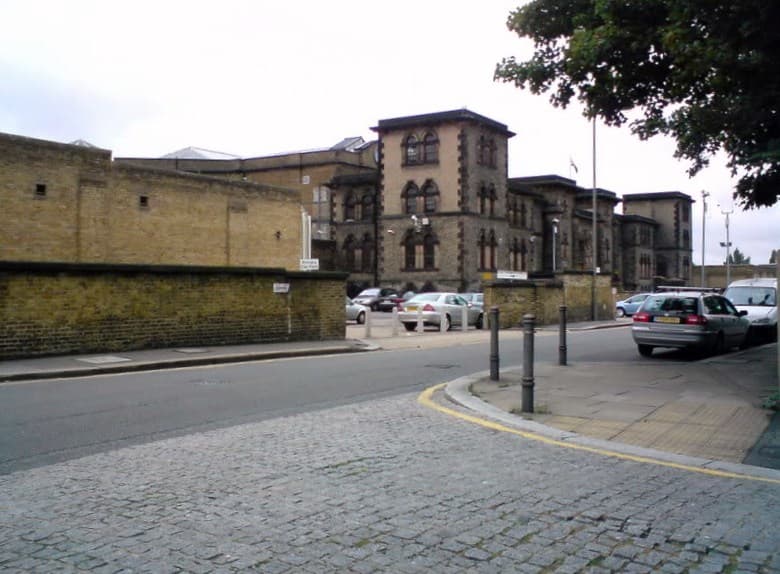
HMP Wandsworth
Reception
Wandsworth is a men’s prison in the London Borough of Wandsworth, South West London.

HMP Bullingdon
Reception
Bullingdon is a men’s prison near Bicester in Oxfordshire.