
How Prison Systems Differ Around the World
25 October 2024
Prison systems around the world vary enormously in their philosophy, conditions, and outcomes. From the rehabilitation-focused models of Scandinavia to the punitive approaches found in parts of Asia and the Americas, how societies choose to imprison their citizens reflects deep cultural values and political priorities.
The Scandinavian Model
Norway, Sweden, and Denmark are often cited as examples of progressive prison systems. The Norwegian approach is built on the principle of "normalisation" — the idea that life inside prison should resemble life outside as much as possible, with the restriction of liberty being the punishment itself.
Norwegian prisons like Halden and Bastøy provide inmates with private rooms rather than cells, access to cooking facilities, communal living areas, and extensive education and work opportunities. Staff are trained for three years and are expected to build positive relationships with inmates.
The results are striking: Norway's reoffending rate is approximately 20 percent within two years, compared to around 48 percent in England and Wales and over 60 percent in the United States. However, critics argue that Norway's small, relatively homogeneous population makes direct comparisons difficult.
The United States
The United States incarcerates more people than any other country, both in absolute numbers and per capita. With approximately 1.9 million people behind bars, the US imprisonment rate of around 500 per 100,000 population far exceeds that of comparable nations.
The US system is characterised by its complexity, with federal, state, and local facilities operating under different rules and standards. Conditions vary dramatically — from the extreme isolation of ADX Florence to minimum-security camps with limited fencing.
The high incarceration rate has been linked to mandatory minimum sentencing, the war on drugs, and political incentives that favour tough-on-crime policies. However, bipartisan reform efforts in recent years have begun to reduce prison populations in some states.
Japan
Japan's prison system is known for its strict discipline and regimented routines. Inmates follow precise daily schedules that govern when they wake, eat, work, and sleep. Silence is enforced during many activities, and infractions of prison rules result in swift punishment.
Despite these strict conditions, Japan's recidivism rate is relatively low, and its prisons are generally safe environments. The incarceration rate is among the lowest of developed nations, partly because Japanese courts favour suspended sentences and community-based supervision.
Brazil
Brazil's prison system faces severe challenges including extreme overcrowding, gang control of many facilities, and frequent deadly violence. The country's prison population has grown to approximately 800,000, with many facilities holding double or triple their intended capacity.
Powerful criminal organisations such as the Primeiro Comando da Capital (PCC) effectively control many prisons, providing governance structures that the state has failed to maintain. Mass killings during inter-gang conflicts have claimed hundreds of lives in recent years.
The Path Forward
International comparisons highlight that there is no single correct approach to imprisonment. However, systems that invest in rehabilitation, maintain humane conditions, and use imprisonment as a last resort consistently produce better outcomes than those relying primarily on punitive approaches.
The challenge for all prison systems is to balance the legitimate need for public protection with the evidence that humane treatment and effective rehabilitation serve society's long-term interests more effectively than punishment alone.
Related prisons
No photograph in this directory
No facility photo on file; we do not use generic stand-ins for named sites.
Florence ADMAX USP
USP (United States Penitentiary)
Florence ADMAX USP — USP in Colorado (Federal BOP listing).
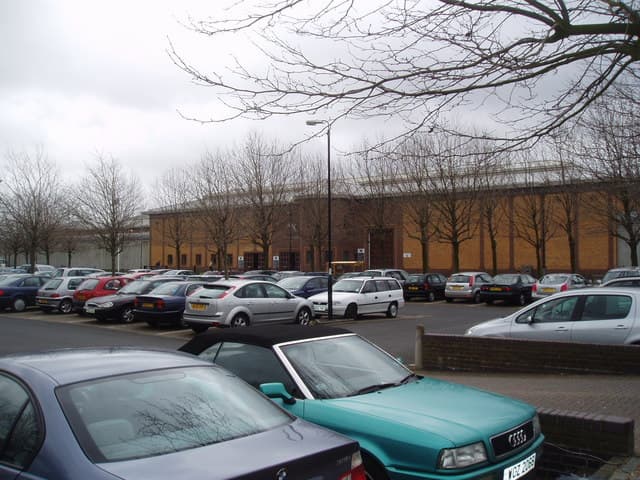
HMP Belmarsh
High Security
Belmarsh is a high security men’s prison in southeast London.
No photograph in this directory
No facility photo on file; we do not use generic stand-ins for named sites.
San Quentin Rehabilitation Center
Capacity: 3,082